Carpet coming back dirty after cleaning: wicking or re-soiling
Carpet that keeps coming back dirty after cleaning is usually showing one of two different patterns: wicking from below, or re-soiling from above. The timing and the color tell them apart.
Carpet that looks clean after cleaning and then shows marks again can be frustrating, and the cause is not always the cleaning itself. Two different patterns are involved, and they look different: wicking brings soil up from below as carpet dries, while re-soiling collects new soil in the fibers over time. This guide explains how to tell them apart, what residue and humidity have to do with each, and what affects whether carpet stays looking clean.
Why carpet keeps coming back dirty after cleaning
The most useful distinction in the research for this guide is between wicking and re-soiling. Wicking appears in hours to 3 days, in the same color as the original mark, because moisture carries soil from the backing or pad upward as the carpet dries. Re-soiling develops over weeks and usually looks gray, because residue in the fibers or newly tracked-in soil collects where feet pass most often. The two patterns need different explanations, and treating one as the other leads to the wrong next step.
Neither pattern, on its own, proves that a cleaning was done poorly. Depth of soil, fiber type, method, residue, humidity, and traffic all play a part. Noting when the marks returned and what color they are gives a clearer picture than the fact that they returned at all.
Residue left in the fibers
Cleaning solutions that stay in the fibers after cleaning can attract and hold soil. Carpet with residue in traffic lanes can therefore look gray again sooner than carpet without it. Residue risk varies by method. Shampoo used alone carries the highest residue risk of the methods covered in the research for this guide, and bonnet cleaning carries residue cautions as well, along with cautions about pile disturbance. Encapsulation works differently: soil is held for removal by later vacuuming, which is why vacuuming after that method matters to the result.
Fiber type qualifies every residue claim. Olefin, for example, is solution-dyed and colorfast, but has a low softening point and a tendency to wick, so heat and friction carry particular cautions for that fiber. Polyester holds oils and matting may not reverse. No single statement about residue applies equally to every fiber.
Humidity and drying in Cedar Rapids homes
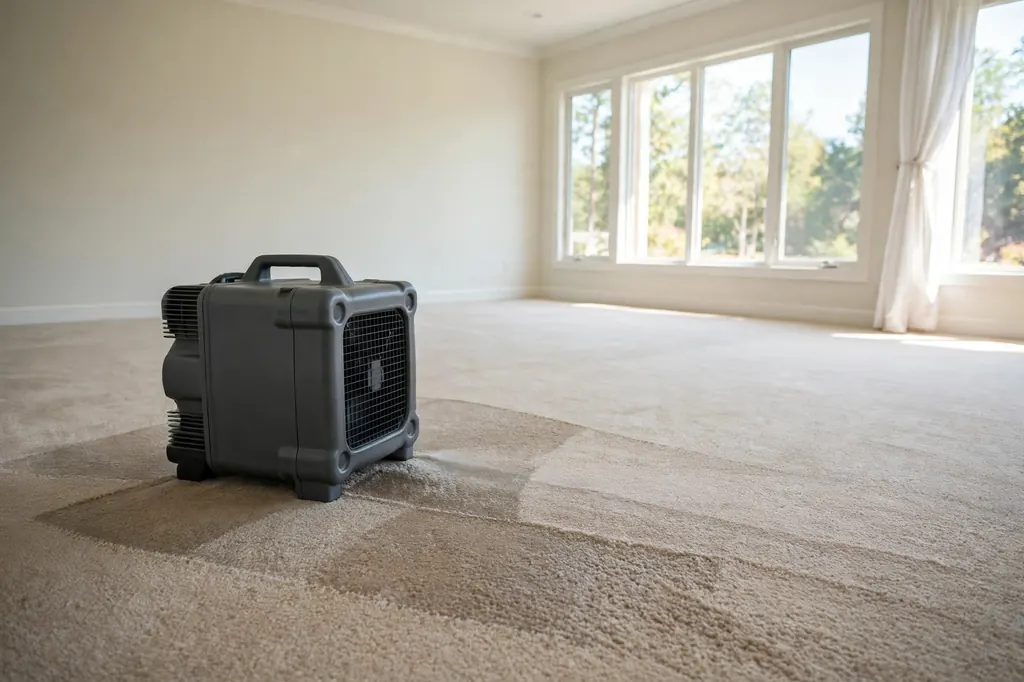
Humidity affects both drying and the patterns described here. Slow drying gives wicking more time to carry soil upward, and humid indoor air slows evaporation generally. The EPA recommends indoor humidity between 30% and 60%, a range that is useful context for drying after any wet method. In Cedar Rapids, humid summer air and sealed winter rooms both slow drying, for different reasons, and rooms with little air movement dry more slowly than rooms with air circulating.
Drying ranges also vary by method. Hot water extraction is typically 4 to 12 hours, up to 24 hours, while low-moisture methods dry faster. The guide on why carpet stays wet after steam cleaning sets out the full ranges.
Wicking: when dirt comes back from below
Wicking happens when moisture reaches soil held in the backing or pad and carries it upward into the fibers as the carpet dries. The returning mark appears in the same place and the same color as the original, within hours to 3 days. Depth is the deciding factor: soil that sits only in the fibers behaves differently from soil that has reached the backing or pad, and surface appearances cannot show which is the case.
Because wicking comes from below, repeated surface attention alone may not change the pattern. No outcome can be promised for any one carpet. Where the same mark returns repeatedly, in the same color and within days, that timing and color are the details worth describing on a call.
Why carpet gets dirty fast in Cedar Rapids homes
Traffic lanes collect soil fastest because feet pass over the same fibers repeatedly, pressing soil in and wearing the pile. Entries collect tracked-in soil from outdoors, including winter salt and sand residue and spring rain and thaw track-in. Homes with dogs see more tracked-in soil and more fiber wear in the routes dogs use. These are general patterns, not statements about any one home, and they explain why some areas of a carpet can look dirty again while others stay clean.
Seasonal track-in is a Cedar Rapids pattern worth noting. The City of Cedar Rapids snow-control operations use salt, sand, and brine on streets in winter, and that material is tracked indoors on footwear. Spring brings rain and thaw track-in.
Common mistakes that cause re-soiling
- Walking on damp carpet in outdoor shoes: damp fibers pick up tracked-in soil readily, which can show as new marks once the carpet dries.
- Skipping vacuuming after low-moisture methods: with encapsulation, soil leaves through later vacuuming, so the result depends on that step.
- Treating every carpet coming back dirty after cleaning as the same problem: wicking and re-soiling have different causes, and the timing and color of the return are what distinguish them.
- Expecting a fixed result: no method carries a promise that soil will not return, and depth, fiber, residue, and traffic all affect what happens next.
What affects whether carpet re-soils in Cedar Rapids Iowa
Several factors affect how soon carpet looks dirty again: residue in the fibers, tracked-in soil at entries, traffic patterns, drying conditions, and how deep the original soil sat. Entry mats and removing outdoor shoes reduce tracked-in soil in general terms. Air movement and indoor humidity in the EPA-recommended 30% to 60% range support drying after wet methods. Vacuuming matters most after methods that rely on it to remove held soil. None of these factors carries a promise, and carpet condition and fiber type qualify every one of them.
For a neutral comparison of methods, including their drying ranges and residue cautions, see the guide on dry carpet cleaning and steam cleaning compared.
When to call a professional
A call is worth making when the same mark returns within days in the same color, when graying in traffic lanes returns quickly after cleaning, or when the pattern is unclear and the timing and color need a professional reading. Describing when the marks returned, what color they are, and what method was used helps the conversation. Call Reliable Carpet Inc at (319) 319-9212, Monday to Friday, 8 AM to 5 PM, to discuss what is being seen. For background on the service itself, see the carpet cleaning page.
Frequently Asked Questions
Why is carpet coming back dirty after cleaning in Cedar Rapids IA?
Two patterns explain most cases. Wicking brings soil up from below as carpet dries, in hours to 3 days, in the same color as the original mark. Re-soiling happens over weeks, as residue or tracked-in soil collects in the fibers, and usually looks gray. Timing and color help tell them apart.
How can I tell wicking from re-soiling in Cedar Rapids Iowa?
Wicking appears within hours to 3 days of cleaning, in the same place and the same color as the original soil. Re-soiling develops over weeks and usually appears as a gray cast, often in traffic lanes. The two patterns have different causes, so the distinction matters before deciding on a next step.
Is re-soiling normal after carpet cleaning in Cedar Rapids?
Some return of soil over weeks is common in traffic lanes, especially where residue remains in the fibers or where outdoor soil is tracked in. Rapid return of the same mark in the same color, within days, points to wicking from below rather than ordinary re-soiling.
What role does residue play in carpet re-soiling?
Residue left in fibers can attract and hold soil, so carpet can look dirty again sooner. Residue risk varies by method: shampoo used alone carries the highest residue risk, and bonnet cleaning carries residue cautions as well. Fiber type also matters, and no residue claim applies equally to every fiber.
Can wicking be prevented after cleaning?
No outcome can be promised. Wicking depends on how deep the soil sits, how much moisture reaches it, and how the carpet dries. Where the same mark returns repeatedly in the same color, describing the timing and color on a call helps a professional assessment.
Get help with carpet cleaning in Cedar Rapids
Call Reliable Carpet Inc at (319) 319-9212 to discuss carpet that looks dirty again after cleaning. Office hours are Monday to Friday, 8 AM to 5 PM, Saturday and Sunday closed.